Fort Lauderdale personal injury attorneys provide boaters with expert advice following boat accidents
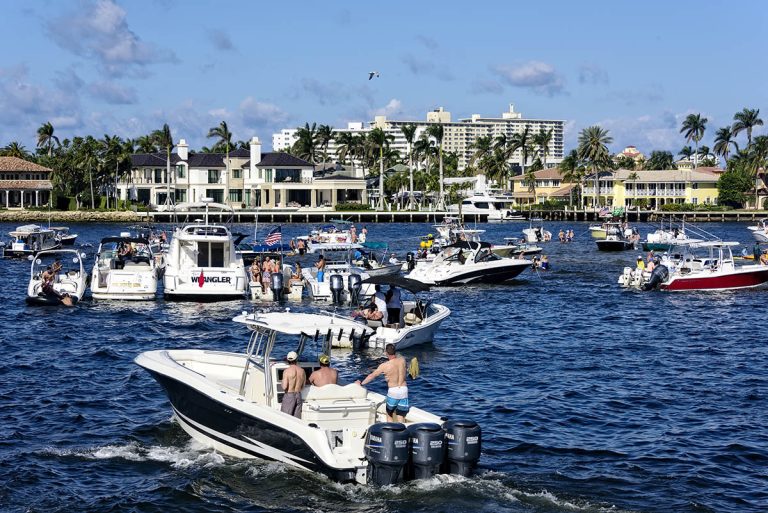
We love living in Fort Lauderdale and the surrounding South Florida area, and one of the reasons why we call ourselves South Floridians is because we can take the boat on the water nearly 365 days a year. Boating goes hand in hand with Fort Lauderdale living the way skiing goes hand in hand with Aspen living. People love the water and they love their boats. But often the dangers of personal injury that can be caused in a boat accident are dismissed by people who are merely thinking of sun and fun as they head out from the dock.
But your boat is a motor vehicle just as your car is a motor vehicle. And similarly, just as a car crash can cause personal injury in Fort Lauderdale, a boat accident can be just as severe. And deadly.
Recreational boat accidents happen often across the country. The U.S. Coast Guard reported 4,158 accidents that involved 626 deaths, 2,613 injuries and approximately $42 million of damage to property as a result of recreational boat accidents in 2015. Causes of boat accident have included operator inattention, improper lookout, operator inexperience, excessive speed, and boating under the influence of drugs or alcohol (BUI).
According to the Florida Fish & Wildlife Conservation Commission, in Broward County, of 8,421 boats registered in the county in 2015, there were four PWC accidents and three reported PWC injuries in 2015 causing $3,400 in property damage. In nearby Miami-Dade, however, of 13,237 registered boats, a total of 33 PWC accidents was reported in 2015, causing 29 injuries and $72,550 worth of property damage. Miami-Dade topped the state with accidents, followed closely by Monroe County with 2,107 registered vessels, 25 accidents and 26 injuries.
But what, you say, is considered a recreational boat? It is typically one of the following:
- Yachts
- Sailboats
- Personal Watercraft (Jet Skis & Wave Runners)
- Pontoons
- Kayaks, Paddle-boards & Canoes
- Center Console Runabouts
- Cabin Cruisers
- Tenders
- Inflatable & Semi Rigid Inflatable Boats
There are many rules for boating in the state of Florida that people need to learn before heading out in our waterways and onto the ocean. For one, no one under 14 years of age may operate any personal watercraft (PWC) on any waterway in Florida, even though they may possess a Florida Boating Safety Education ID Card. No one under the age of 18 years may rent/lease a PWC, the law states. It is also illegal for the owner of a PWC to knowingly allow a person under 14 years of age to operate a PWC.
If a boat operator is involved in an accident in which personal injury has occurred that is “beyond immediate first-aid, death, disappearance of any person under circumstances which indicate death or injury,” and causes at least $2,000 in damage to the vessel or other personal property is mandated to report the accident to the Florida Fish and Wildlife Conservation Commission, the sheriff of the county in which the accident occurred, or the police chief of the municipality in which the accident occurred, if applicable, according to the state law. Just as it is illegal to leave the scene of an accident on the roads, it is also unlawful to leave the scene of a boat accident in Florida.
If you have been involved in a boat accident, you may be able to sue the boat’s operator if there is proof he/she was negligent and did not provide for passengers’ reasonable safety. The owner of the boat, the boat manufacturer, the rental company, or other passengers who acted in a negligent or reckless manner may also be liable.
If you suffered a boat accident in Florida’s waterways, your personal injury case could be more complicated. The question attorneys need to evaluate is which law applies to your case: federal or state. Boat accidents and personal injury cases in Fort Lauderdale and throughout Florida can be complicated, based on which law applies. Only an expert in the field, who’s familiar with Florida statutes and general maritime law, can help you navigate the waters of your legal rights. Or more to the point, can help you sort through the definition of the term “navigable waterways.”
According to the U.S. Coast Guard, navigable waterways are “those waters that are subject to the ebb and flow of the tide and/or are presently used, or have been used in the past, or may be susceptible for use to transport interstate or foreign commerce.” If the accident did not occur on navigable waterways, state laws take precedence and your case will most likely be filed in a state court.
So no matter what sort of boat you were in, or which waterway you were on when the accident occurred, if you have suffered personal injury in Fort Lauderdale or the surrounding area from a boat accident, you should contact a personal injury litigation attorney immediately after seeing a doctor to make sure your rights are not violated and that you receive fair compensation for your injuries. Smooth sailing may be in your future, but only if you can successfully wade through the legalities of your case.