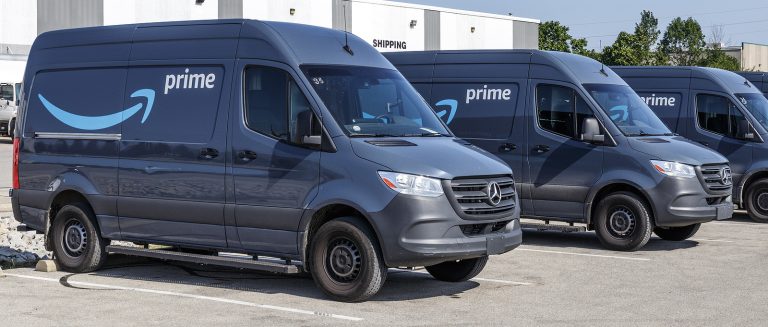
In July 2019, Florida became one of twelve states that allow autonomous cars to operate on their public roadways without a human in the vehicle. Florida’s governor, Ron DeSantis, proclaimed that “Florida officially has an open-door policy to autonomous vehicle companies.” While the governor touts the passing of the bill as a coming economic boon for Florida, many question the implications for safety and accountability.
Under the current Florida law, the cars do not have to pass state inspection or any other type of certification. The responsibility for safety is left to the companies who are building the technology. The only nod to safety is increased insurance limits for autonomous cars.
States that have courted the tech giants to bring autonomous vehicles to their roadways tout the economic benefits. Undoubtedly, states that are making it easier for testing and deployment will see the creation of new jobs. They hope that making their roadways friendly to autonomous cars will also attract the attention of other high tech companies.
Florida is the third state, behind Michigan and Texas, to allow the deployment of fully autonomous cars without a human back-up driver. The reality is that this technology is here to stay. Initial testing shows that autonomous vehicles are safer than those driven by humans. The waters are murkier around the question of how much safer?
There are also moral concerns about how technology will make decisions in driving circumstances. For instance, if avoidance of a collision requires the car to drive onto a crowded sidewalk of pedestrians or drive directly into a collision. Who is responsible for deciding which is the lesser harm?
Arizona was one of the first states to open its highways to driverless cars boldly. They were also the home to the first reported death when an autonomous car struck and killed a pedestrian. Autonomous vehicles are meant to be a safer means of transportation eventually, but is the technology there yet?
In the Arizona case, there was a human back-up driver in the car who failed to respond to the pedestrian as well. Although Florida’s law does not require a human back-up driver, those that are in the vehicle are exempt from all statutes regarding cell phone use and other distractions to driving.
States are left with complete autonomy to make decisions regarding self-driving vehicles. The Federal Automated Vehicles Policy offers no oversight or federal regulation concerning autonomous cars. It provides suggestions for states to follow, but without federal regulation, it is up to each state to do as they want. The question remains, are states passing laws to entice big tech and the ensuing dollars without adequate thought to the safety of its citizens?
To date, there is no standardized parameter of how safe an autonomous vehicle must be. The industry is largely regulating itself. In recent history, there has been no other technological advance of this magnitude with so little governmental oversight.
There is one unescapable fact. Even in the safest autonomous cars, accidents will still happen. The argument can be made that statistically, the autonomous cars on the roadways now are more reliable than those driven by human drivers. However, when an accident occurs with human drivers, it is usually obvious who is at fault. The answer is not as simple in autonomous cars.
The National Transportation and Safety Board, in a 2018 fatal crash in Florida, found that Tesla’s autopilot feature was engaged at the time of the accident. So, who bears the responsibility? As Tesla’s autopilot was never meant to replace a human driver, the responsibility remains with drivers who relied too much on the technology. However, fully autonomous vehicles will create more complicated questions of legal liability.
Inevitably, there will be injuries and fatalities on Florida roadways involving autonomous cars without a driver. With no established legal precedent, who will be responsible? It is impossible to sue the technology itself, so does that mean that the designers of the technology will be held accountable? To further complicate that question, there are usually numerous companies involved in the technology that controls each autonomous vehicle.
It is not hard to imagine the complexity in a lawsuit where each entity blames another for the failure. Current laws regarding legal liability in auto crashes will be of little use. Where does this leave victims and their families while they wait for new legal precedents to be set?
The Injury Firm has kept abreast of the new statute allowing autonomous vehicles. We are prepared to help victims injured by an autonomous vehicle.